دليل مجاني من مسيرة
سيرة ذاتية احترافية في عين الموارد البشرية وأنظمة ATS: ما يُكتب فيها وما يُترك
ما الذي يجعل السيرة الذاتية احترافية؟ يظن كثيرون أنها الألوان والصورة والبيانات الشخصية، لكن أنظمة التوظيف والموارد البشرية تبحث عن شيء آخر: نص واضح في عمود واحد، وعناوين مألوفة، وأمثلة حقيقية على المهارات. وهذا شرح السبب بمصادر يمكن الرجوع إليها، مع مثال قبل التعديل وبعده.
نكتب سيرتك بعمود واحد وعناوين مألوفة، بلا صورة ولا بيانات شخصية لا حاجة إليها، وتمر بفحص الجودة قبل التسليم.
كيف يقرأ نظام ATS السيرة؟
نظام تتبع المتقدمين (ATS) برنامج تستقبل به جهات التوظيف الطلبات، ويحاول قراءة السيرة وتعبئة ملف المتقدم منها تلقائيًا. وتذكر شركة Greenhouse، وهي من مزودي هذه الأنظمة، في صفحة الدعم لعملائها أن هذه القراءة قد تفشل في السير التي فيها رسومات أو صور، أو جداول وترويسة وتذييل، أو أعمدة، أو بيانات تواصل داخل مربع نص، أو أقسام غير واضحة، فتُعبّأ الحقول يدويًا (Greenhouse).
فالنظام يقرأ النص وترتيبه، لا الألوان والتصميم. وخطوات الفحص الذاتي في دليل السيرة المتوافقة مع ATS.
كيف تقرأ الموارد البشرية السيرة؟
النظرة الأولى قصيرة: في دراسة لتتبع حركة العين نشرتها شركة Ladders عام 2018، كان متوسط النظرة الأولى من مسؤولي التوظيف إلى السيرة 7.4 ثانية. ونجحت السير ذات التصميم البسيط والأقسام والعناوين الواضحة، خصوصًا مع مسميات بخط عريض ونقاط بالإنجازات، وتراجعت السير المزدحمة ومتعددة الأعمدة وقليلة المساحات البيضاء وذات الجمل الطويلة (HR Dive، 2018).
ولم نجد دراسة منشورة مماثلة عن مسؤولي التوظيف في السعودية، لكن الدرس واضح: أهم المعلومات في أعلى الصفحة، ولكل قسم عنوان.
الشكل: عمود واحد وعناوين واضحة
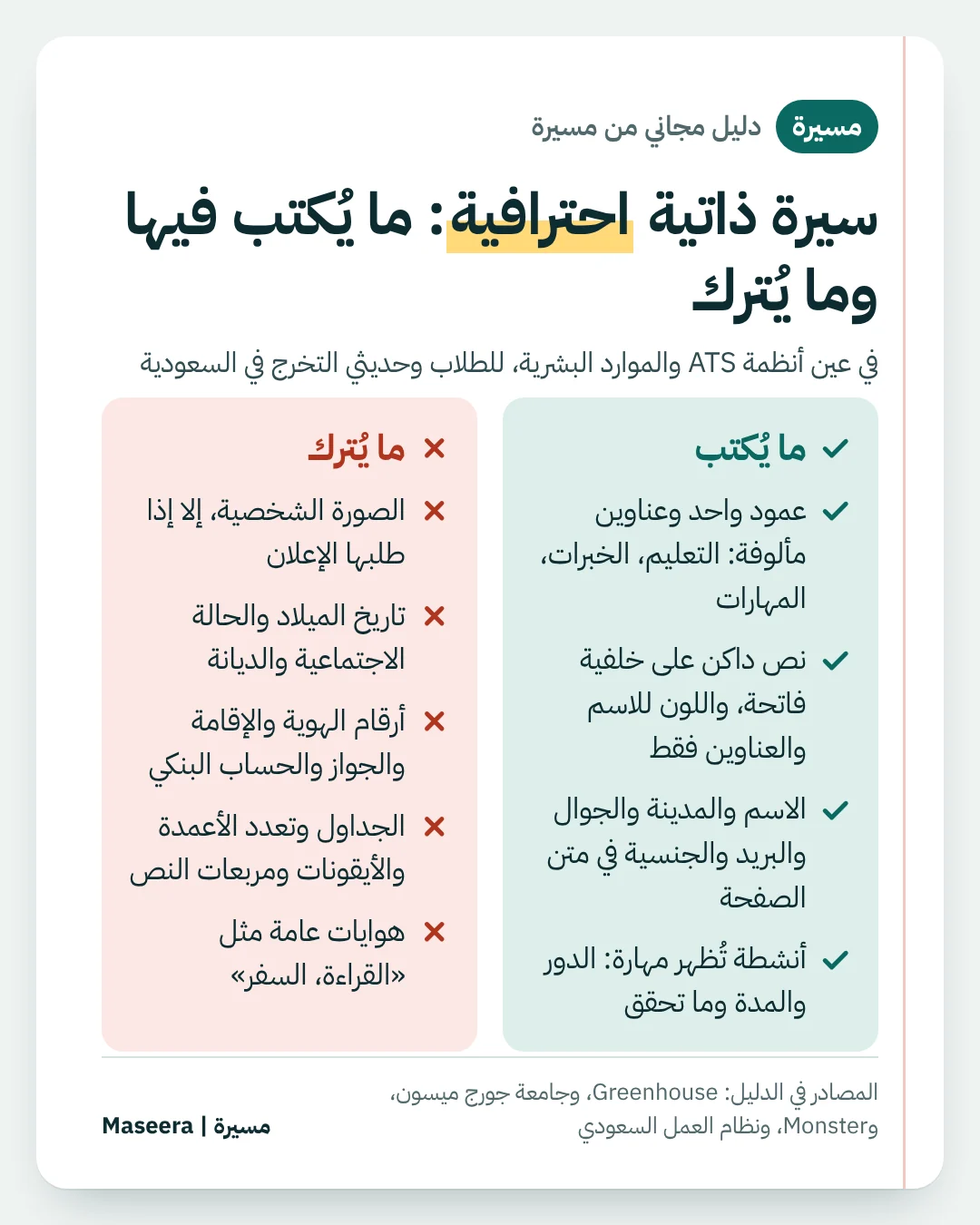
- عمود واحد، بلا جداول أو مربعات نص أو رسوم بيانية أو أيقونات أو شعارات؛ فهذه قد تربك قراءة البرامج للسيرة (جامعة جورج ميسون).
- عناوين أقسام مألوفة: التعليم، الخبرات، المهارات (جامعة جورج ميسون).
- الاسم ووسائل التواصل في متن الصفحة، لا في الترويسة أو التذييل أو مربع نص (Greenhouse).
- خط شائع مثل Arial أو Calibri، ونقاط دائرية بسيطة، ولا نص داخل صورة (جامعة جورج ميسون).
واختبار جامعة جورج ميسون: لو اختفت الرسومات، هل تبقى كل المعلومات؟ ونجوم المهارات وأشرطتها لا تنجح فيه، لذلك نقترح كتابة المستوى بالكلمات، مثل «الإنجليزية: مستوى متقدم».
الألوان: للتنظيم لا للزينة
يقول موقع التوظيف Monster إن اللون نفسه لا يؤثر في قراءة نظام ATS للسيرة، وإن المشكلة في الرسومات والأيقونات ومربعات النص والنص الباهت. وينصح بنص داكن على خلفية فاتحة، وبأن يكون اللون للاسم والعناوين فقط، وينبّه إلى أن كثيرًا من مسؤولي التوظيف ما زالوا يطبعون السير بالأبيض والأسود. ويرى الأبيض والأسود أو اللمسات الخفيفة جدًّا الخيار الأسلم في المجالات التقليدية، مثل المحاسبة والمالية والقانون والطب (Monster، 2026).
واختبار سريع: معاينة السيرة بالأبيض والأسود؛ فإن صعبت قراءة سطر، فاللون في غير موضعه.
الصورة الشخصية: تُترك إلا إذا طُلبت
الصورة لا تفيد نظام ATS، بل تعدّها Greenhouse من أسباب فشل قراءة السيرة (Greenhouse). وفي الخليج تختلف الممارسة: يذكر موقع التوظيف Bayt.com أن كثيرًا من مسؤولي التوظيف في الإمارات والخليج لا يرون الصورة ضرورية، وأن بعض أصحاب العمل في المنطقة ما زالوا يطلبونها في إعلاناتهم، والأفضل حينها الالتزام بالطلب (Bayt.com). وفي تقرير لصحيفة The National الإماراتية رحّب مسؤول توظيف بالصور، بينما حذّرت مديرة الموارد البشرية في Bayt.com من أنها قد تقود إلى تحيز غير واعٍ (The National، 2023).
القاعدة العملية: لا صورة في السيرة. وإن طلبها الإعلان أو نموذج التقديم، فتُرفق حيث طُلبت: صورة عالية الدقة بخلفية سادة ولباس رسمي، لا «سيلفي» ولا صورة جواز (Bayt.com).
البيانات الشخصية: ما يُكتب وما يُترك
ما يُكتب: الاسم، والمدينة، ورقم الجوال، وبريد إلكتروني لائق، ورابط LinkedIn إن وُجد، وسطر للجنسية مثل «الجنسية: سعودية». فللجنسية أثر في التوظيف هنا: ينص نظام العمل على أن العمل حق للمواطن، ولا يجوز لغيره ممارسته إلا بعد توافر الشروط المنصوص عليها فيه (المادة الثالثة)، وبعض البرامج للسعوديين فقط، مثل «تمهير» (هدف: تمهير).
ما يُترك: تاريخ الميلاد والعمر، والجنس، والحالة الاجتماعية، والديانة، والحالة الصحية، وأرقام الهوية والإقامة والجواز والحساب البنكي.
- ينصح مكتب MIT بترك العمر والديانة والصحة والحالة الاجتماعية خارج السيرة (MIT).
- والمادة الثالثة نفسها تجعل المواطنين متساوين في حق العمل دون تمييز على أساس الجنس أو الإعاقة أو السن أو غيرها، ومن ذلك عند التوظيف والإعلان عنه (وزارة الموارد البشرية). فلا داعي لإثبات السن في السيرة.
- وتنبّه جامعة ميونخ (LMU) إلى أن بيانات السيرة قد تُستغل في سرقة الهوية، فلا تُعطى أرقام الهوية والجواز والحساب البنكي إلا عند الحاجة الفعلية (LMU).
وإن طُلب بيان منها؟ لبعض البرامج شروط، مثل ألا يتجاوز العمر 30 سنة في «تمهير» (هدف: تمهير). ومكان هذا البيان نموذج التقديم عند طلبه، لا السيرة.
الهوايات أم الأنشطة؟
قسم الهوايات اختياري، ويفيد أكثر حين تقل الخبرة العملية. لكن «القراءة، السفر، كرة القدم» لا تقول شيئًا عن مستوى المشاركة. والأقوى نشاط حقيقي بسياقه والمهارة التي بناها وأي إنجاز فيه، مثل قيادة فريق رياضي في الجامعة. ولا تُذكر هواية غير حقيقية، فقد تأتي عنها أسئلة في المقابلة (جامعة ليفربول، 2023).
وفي مسح «Job Outlook 2026» من الرابطة الوطنية للكليات وأصحاب العمل في الولايات المتحدة (NACE)، أراد أصحاب العمل من يعمل ضمن فريق ويحل المشكلات ويتواصل بفاعلية، وقال رئيس الرابطة إن أصحاب العمل يريدون أمثلة، لا قوائم مهارات (NACE، 2026). لذلك نقترح قسم «الأنشطة والتطوع» بدل «الهوايات»: الدور، والمدة، وما تحقق. وما يُحسب خبرةً مشروح في دليل أول سيرة ذاتية.
مثال توضيحي: قبل وبعد
سيرة متخيَّلة لا تخص شخصًا حقيقيًّا: السنة الأخيرة في نظم المعلومات، والتقديم على تدريب تعاوني في تحليل البيانات.
قبل: صورة شخصية، وعمودان على خلفية ملونة، والاسم والجوال في ترويسة الصفحة، ثم «تاريخ الميلاد: 2004/3/12» والحالة الاجتماعية والديانة ورقم الهوية، ومهارات بالنجوم مثل «Excel ★★★★☆»، و«الهوايات: القراءة، السفر، كرة القدم».
بعد:
- عمود واحد بنص أسود، والاسم في أعلى الصفحة، ثم: «الرياض | 05XXXXXXXX | name@example.com | الجنسية: سعودية».
- المهارات بالكلمات: «Excel (الجداول المحورية، تنظيف البيانات)؛ SQL (مستوى مبتدئ)».
- الأنشطة بدل الهوايات: «عضوية اللجنة المنظمة لنادي البرمجة في الجامعة (2025 إلى 2026): تنظيم ورشتين في Python حضرهما 40 طالبًا وطالبة».
- بلا صورة ولا تاريخ ميلاد ولا حالة اجتماعية ولا ديانة ولا رقم هوية.
سيرتك الذاتية مع مسيرة: بعد محادثة قصيرة بالعربية أو الإنجليزية، نكتب سيرة صادقة بعمود واحد وعناوين مألوفة، بلا صورة ولا بيانات شخصية لا حاجة إليها، ووفق أعراف السيرة الذاتية في السعودية. لا نضيف شهادة أو خبرة أو رقمًا ليس لديك، وتمر كل سيرة بفحص الجودة قبل التسليم، وتصل بصيغتي Word وPDF.
المصادر
- Greenhouse Support، «Unsuccessful resume parse» (آخر تحديث 2 مارس 2026): support.greenhouse.io
- HR Dive، «Eye tracking study shows recruiters look at resumes for 7 seconds»، 8 نوفمبر 2018، عن دراسة Ladders: hrdive.com
- معهد ماساتشوستس للتقنية، مكتب CAPD، «Resumes» (آخر تحديث 9 فبراير 2026): capd.mit.edu
- George Mason University Career Services، «Make your applications tech-friendly» (PDF، 2026): webdocs.gmu.edu
- Monster، «What Is the Best Color for Resumes? When & How to Use Resume Color Theory» (آخر تحديث 23 أبريل 2026): monster.com
- Bayt.com، «Should You Put Your Photo on Your CV in the GCC?» (بلا تاريخ، اطّلعنا عليها في 5 نوفمبر 2026): bayt.com
- The National، «Could a photo on your CV push you out of frame for a new job?»، 13 يونيو 2023: thenationalnews.com
- وزارة الموارد البشرية والتنمية الاجتماعية، نظام العمل، «التعريفات / الأحكام العامة»، المادة الثالثة: hrsd.gov.sa
- صندوق تنمية الموارد البشرية، «تطوير الخريجين: تمهير» (آخر تحديث 4 أكتوبر 2026): hrdf.org.sa
- Jobline LMU، جامعة ميونخ، «Making your application safe» (بلا تاريخ): jobline.uni-muenchen.de
- جامعة ليفربول، «Spotlight on CVs: The Interest Section»، 17 أبريل 2023: liverpool.ac.uk
- NACE، «The High-Impact Skills College Students Should Showcase on Their Resumes»، 23 أبريل 2026: naceweb.org
A free guide from Maseera
A professional CV for HR and ATS: what goes in, what stays out
Many students think a professional CV means colours, a photo and personal details. HR and hiring systems want something else: clear text in one column, familiar headings and real examples of skills. Here is why, with sources.
We write your CV in one column with familiar headings, without a photo or unneeded personal details, and check its quality before delivery.
How an ATS reads your CV
An applicant tracking system (ATS) receives applications and tries to fill in your profile from your CV automatically. Greenhouse, an ATS provider, says this can fail for CVs with graphics or photos, tables, headers and footers, columns, contact details in a text box, or unclear sections; someone then types your details in by hand (Greenhouse).
It reads text and order, not design. To test your CV, see What “ATS-friendly” means.
How HR reads it
In Ladders' 2018 eye-tracking study, recruiters skimmed CVs for 7.4 seconds on average. Simple layouts with clear sections and headings did well, especially with bold job titles and bulleted achievements; cluttered CVs with multiple columns, little white space and long sentences did poorly (HR Dive, 2018).
We found no similar study in Saudi Arabia, but the lesson holds: key facts first, and a heading for every section.
Layout: one column, clear headings
The basics, from George Mason University's career guide:
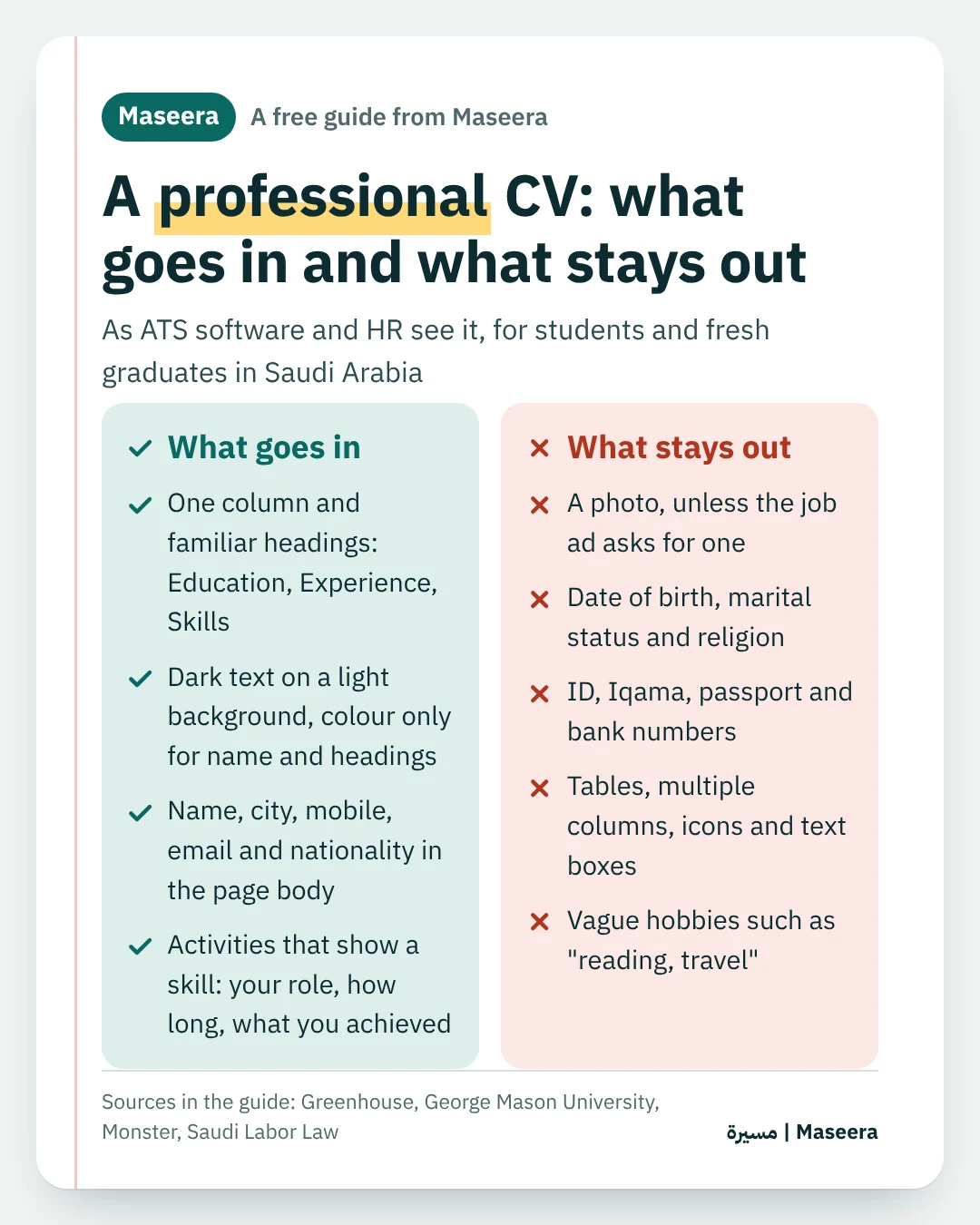
- One column, with no tables, text boxes, charts, icons or logos, which can scramble how software reads a CV.
- Familiar headings: Education, Experience, Skills.
- A common font such as Arial or Calibri, round bullets, and no text inside images.
Keep your name and contact details in the page body, not a header, footer or text box (Greenhouse). George Mason's test: if the graphics disappeared, would all the information remain? Skill stars and bars fail it, so write levels in words: “English: advanced”.
Colours: for structure, not decoration
Monster says colour itself doesn't affect ATS parsing; graphics, icons, text boxes and low-contrast text cause the trouble. It advises dark text on a light background, colour only for name and headings, and notes that many hiring managers still print CVs in black and white. For accounting, finance, law and medicine, it calls black and white or very subtle accents the safest choice (Monster, 2026).
Quick test: preview your CV in grayscale; if a line is hard to read, the colour is wrong.
Photo: leave it out unless asked
A photo does nothing for an ATS, and Greenhouse lists photos among the causes of failed parsing (Greenhouse). In the Gulf, practice varies. Bayt.com says many Gulf recruiters see a photo as not essential, but some employers in the region still ask for one in job ads, and then it is best to comply (Bayt.com). In The National, one UAE recruiter welcomed photos, while Bayt.com's HR director warned they can lead to unconscious bias (The National, 2023).
The practical rule: no photo on the CV. If the job ad or form asks for one, add it there: a high-resolution headshot, plain background and formal clothes, not a selfie or passport photo (Bayt.com).
Personal details: what goes in and what stays out
What goes in: name, city, mobile, a professional email, LinkedIn if you have it, and a nationality line such as “Saudi National”. Nationality matters here: the Labor Law makes work a right of the citizen, and others may work only once its conditions are met (Article 3, in Arabic); some programs, such as Tamheer, are for Saudis only (HRDF: Tamheer).
What stays out: date of birth or age, gender, marital status, religion, health, and ID, Iqama, passport or bank numbers.
- MIT advises leaving out your age, religion, health and marital status (MIT CAPD).
- Article 3 also bans discrimination between citizens by sex, disability, age or any other form, including at hiring and in job ads (Labor Law, in Arabic), so a CV need not show your age.
- LMU Munich warns that CV details can be used to steal your identity, so give ID, passport or bank numbers only when specifically needed (LMU Munich).
Asked for one? Some programs set conditions, such as Tamheer's age limit of 30 (HRDF: Tamheer); give that detail in the application form, not the CV.
Hobbies or activities?
An interests section is optional, and helps most with little work experience. But “reading, travel, football” shows no involvement. A real activity is stronger, with its context, the skill it built and any achievement, such as captaining a university sports team. Never invent one: an interviewer may ask (University of Liverpool, 2023).
In NACE's Job Outlook 2026 survey, employers wanted people who can work in a team, solve problems and communicate, and NACE's president said they want examples, not lists of skills (NACE, 2026). So we suggest “Activities and volunteering” instead of “Hobbies”: role, duration and result. See also Your first CV.
Example: before and after
A made-up CV, not a real person: final-year Information Systems student, applying for a data analysis co-op.
Before: a photo, two columns on a coloured background, name and phone in the header, “Date of birth: 12/3/2004”, marital status, religion, national ID, skill stars (“Excel ★★★★☆”) and “Hobbies: reading, travel, football”.
After:
- One column in black text: the name, then “Riyadh | 05XXXXXXXX | name@example.com | Saudi National”.
- Skills in words: “Excel (pivot tables, data cleaning); SQL (beginner)”.
- Activities, not hobbies: “Organizing committee, university programming club (2025 to 2026): ran two Python workshops for 40 students”.
- No photo, birth date, marital status, religion or ID number.
Your CV with Maseera: after a short chat in Arabic or English, we write a truthful CV in one column with familiar headings, without a photo or unneeded personal details, following Saudi CV conventions. We never add a certificate, job or number you don't have, and every CV passes our quality check before delivery, in Word and PDF.
Sources
- Greenhouse Support, “Unsuccessful resume parse” (updated 2 March 2026): support.greenhouse.io
- HR Dive, “Eye tracking study shows recruiters look at resumes for 7 seconds”, 8 November 2018: hrdive.com
- MIT CAPD, “Resumes” (updated 9 February 2026): capd.mit.edu
- George Mason University Career Services, “Make your applications tech-friendly” (PDF, 2026): webdocs.gmu.edu
- Monster, “What Is the Best Color for Resumes? When & How to Use Resume Color Theory” (updated 23 April 2026): monster.com
- Bayt.com, “Should You Put Your Photo on Your CV in the GCC?” (undated, read 5 November 2026): bayt.com
- The National, “Could a photo on your CV push you out of frame for a new job?”, 13 June 2023: thenationalnews.com
- Ministry of Human Resources and Social Development, Labor Law, Article 3 (Arabic): hrsd.gov.sa
- HRDF, “Graduate Development: Tamheer” (updated 4 October 2026): hrdf.org.sa
- LMU Munich, Jobline, “Making your application safe” (undated): jobline.uni-muenchen.de
- University of Liverpool, “Spotlight on CVs: The Interest Section”, 17 April 2023: liverpool.ac.uk
- NACE, “The High-Impact Skills College Students Should Showcase on Their Resumes”, 23 April 2026: naceweb.org